




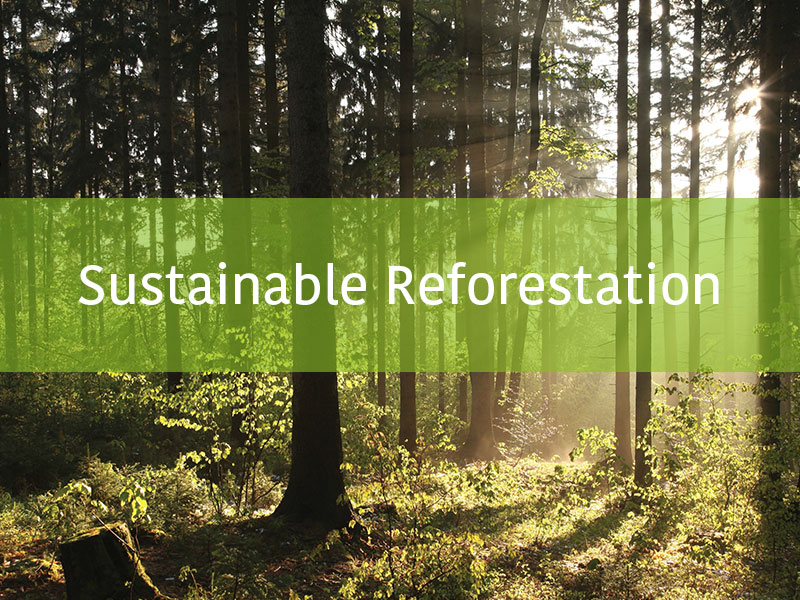
As companies that make use of wood as a material, the onus falls on us to practise sustainable reforestation to ensure that we do not overuse and eventually deplete this valuable natural resource and cause harm to the environment as a result. Luckily, wood is a renewable resource, it is just up to us to ensure that we plant more trees than we cut down, otherwise nature will be unable to keep up with our ever-increasing demand. With the correct process, wood can be cultivated, harvested and re-cultivated in a sustainable way that ensures no lasting damage will be done to the environment.
There are many reasons why reforestation is a crucial practise, from increasing the supply of available wood, to protecting the environment. Trees are the earth’s main way of recycling carbon-dioxide into the oxygen that we breathe. With increased deforestation, we are effectively damaging the earth’s lungs and therefore directly jeopardising the quality and availability of clean air to breathe. Deforestation also destroys local ecosystems and the habitats of the wildlife that calls the forests home. Forests also protect soil from soil erosion, which in turn can lead to a loss of nutrient-rich topsoil and cause soil to become loose, unstable and arid.
How do we combat deforestation? Well, that’s where sustainable reforestation comes in. A sustainable forest is a forest in which timber is grown for wood-based products such as wood pulp or furniture. It is sustainably maintained by ensuring that every tree that is felled is replaced with a seedling that will then grow into a mature tree. This system must be correctly and carefully monitored and maintained to protect the local ecosystems.
Reforestation requires that the appropriate tree species be planted, based on what kind of trees naturally occurred in the area before the trees were felled and what kind of timber is needed. There are numerous methods which can be used for reforestation, which include natural regeneration methods such as root suckering and natural seeding; or artificial regeneration methods such as machine or hand-planting.
Trees within a sustainable forest follow a life cycle that spans many decades as they grow from seedlings into mature trees. The process of reforestation starts when an area of a forest is chosen for timber production. Once the trees in the area have been felled, they need to be replaced with young trees known as seedlings. Seedlings start out life in greenhouses where they are grown from seeds until they are strong enough to be transplanted into a sustainable forest. Once the seedlings are strong enough, they are then planted in the sustainable forest, to replace mature trees which have been felled. The seedlings will then start growing in their new home. Depending on how long it takes for the particular species of tree to mature – a process which can take decades – the young trees will continue to grow until such time as they have reached maturity. The growth of these trees is monitored carefully and once mature, usually between 25-30 years of age, the trees will then be felled.
This process of reforestation repeats itself and thus ensures that forestry continues to remain a sustainable practise that doesn’t damage the environment.
Read our previous article here
Find out more about our Vision and mission here: https://www.sonae.projects.coppertable.co.za/company/who-we-are/vision-mission/