




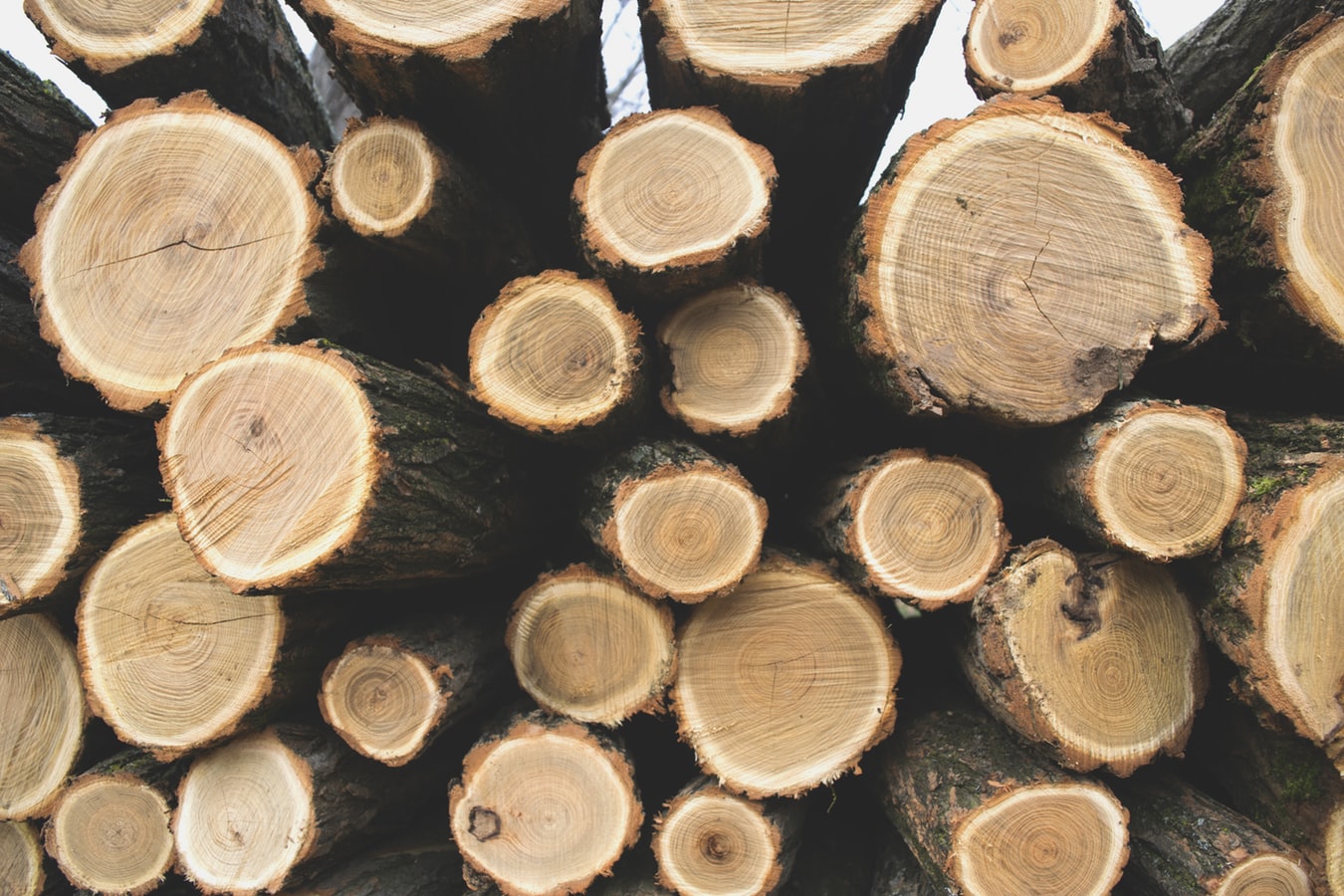
At the heart of Sonae Arauco lies the timber supply we use to make our Medium Density Fibreboard (MDF) and Particleboard. These boards form the basis of our range of wood-based decorative panels. To give you a better idea of where and how we source our timber, we spoke to Gavin Burnhams – Sonae Arauco’s timber specialist – about this process:
Tell us a little bit about the timber Sonae Arauco uses to make its boards?
Sonae Arauco SA (Pty) Ltd is a niche consumer of raw material timber in that we have the flexibility to utilize formal forest products such as pulp logs as well as a diverse range of secondary processing by-products in the form of wood chips, sawdust and offcuts. About half of our intake is in the form of roundwood with the balance being a mix of residual sawmill products in various ratios depending on availability.
Where does Sonae Arauco source its timber from?
Sonae South Africa does not own any of its own plantations and is therefore fully reliant on the primary and secondary processing industries for all of our raw material timber supply. Geographically timber is sourced about 300 km North and 300 km South of our production facility in White River, with connections to most of the major growers in the region. Currently about 25 sawmills supply various residual products to Sonae Arauco.
What species of trees are used for timber?
The bulk of our timber species intake is a range of commercial eucalyptus species with the lesser portion being Pinus species.
How does Sonae Arauco to contribute to the local timber industry?
We have the added advantage of being able to assist growers when disaster strikes in the form of fire, insects or diseases, in that our process allows for a fair level of raw material flexibility as we are well positioned to utilize timber that is conventionally not suited to other formal processes.
How do you transport your timber?
Sonae Arauco makes use of a variety of independent hauliers as we do not own our own fleet.
Are there any silvicultural requirements for your particle and fibre boards, for example: tree breeding and hybrids, age of logs and log dimensions?
Essentially, we have a very tolerant production process which largely eliminates most of the biophysical timber properties through conversion to a precision engineered wood product. Our specifications allow for logs from 5cm to 55 cm in diameter – the biggest challenge is to present a consistent log density profile to the production process. This entails a calculated mix of juvenile, intermediate and mature timber profiles.
Have you been affected by wildfires, burnt wood and climate issues?
We are in the fortunate position whereby we are able to assist growers suffering from losses due to wildfires, as long as no char is evident on the timber fibres, we are able to successfully process burnt timber. As a global entity we are fully aware of climate impacts due to anthropocentric activities and as such have positioned ourselves as fully compliant to all environmental legislative requirements as well as being fully FSC CoC / CW compliant (since 2013) – with the primary objective of only purchasing timber from sustainable renewable resources. We are also ISO 9001 / 14001 / 18001 compliant with valid certification.
If you missed our article on the process of how we turn the timber into Medium Density Fibreboard (MDF) and Particleboard (PB) you can view the article here.
At the heart of Sonae Arauco lies the timber supply we use to make our Medium Density Fibreboard (MDF) and Particleboard. These boards form the basis of our range of wood-based decorative panels. To give you a better idea of where and how we source our timber, we spoke to Gavin Burnhams – Sonae Arauco’s timber specialist – about this process:
Tell us a little bit about the timber Sonae Arauco uses to make its boards?
Sonae Arauco SA (Pty) Ltd is a niche consumer of raw material timber in that we have the flexibility to utilize formal forest products such as pulp logs as well as a diverse range of secondary processing by-products in the form of wood chips, sawdust and offcuts. About half of our intake is in the form of roundwood with the balance being a mix of residual sawmill products in various ratios depending on availability.
Where does Sonae Arauco source its timber from?
Sonae South Africa does not own any of its own plantations and is therefore fully reliant on the primary and secondary processing industries for all of our raw material timber supply. Geographically timber is sourced about 300 km North and 300 km South of our production facility in White River, with connections to most of the major growers in the region. Currently about 25 sawmills supply various residual products to Sonae Arauco.
What species of trees are used for timber?
The bulk of our timber species intake is a range of commercial eucalyptus species with the lesser portion being Pinus species.
How does Sonae Arauco to contribute to the local timber industry?
We have the added advantage of being able to assist growers when disaster strikes in the form of fire, insects or diseases, in that our process allows for a fair level of raw material flexibility as we are well positioned to utilize timber that is conventionally not suited to other formal processes.
How do you transport your timber?
Sonae Arauco makes use of a variety of independent hauliers as we do not own our own fleet.
Are there any silvicultural requirements for your particle and fibre boards, for example: tree breeding and hybrids, age of logs and log dimensions?
Essentially, we have a very tolerant production process which largely eliminates most of the biophysical timber properties through conversion to a precision engineered wood product. Our specifications allow for logs from 5cm to 55 cm in diameter – the biggest challenge is to present a consistent log density profile to the production process. This entails a calculated mix of juvenile, intermediate and mature timber profiles.
Have you been affected by wildfires, burnt wood and climate issues?
We are in the fortunate position whereby we are able to assist growers suffering from losses due to wildfires, as long as no char is evident on the timber fibres, we are able to successfully process burnt timber. As a global entity we are fully aware of climate impacts due to anthropocentric activities and as such have positioned ourselves as fully compliant to all environmental legislative requirements as well as being fully FSC CoC / CW compliant (since 2013) – with the primary objective of only purchasing timber from sustainable renewable resources. We are also ISO 9001 / 14001 / 18001 compliant with valid certification.
If you missed our article on the process of how we turn the timber into Medium Density Fibreboard (MDF) and Particleboard (PB) you can view the article here: https://www.sonae.projects.coppertable.co.za/manufacturing-melamine-boards-what-happens-next/