




We previously wrote an article which looked at the process behind how our wood-based panels are made – from the process of how medium density fibreboard (MDF) and particleboard are made, to the actual process where the melamine facing is applied. What we haven’t looked at, however, is how these wood-based panels are turned into a trendy kitchen cabinet or bedroom cupboard. To give you a better idea of the manufacturing process that melamine boards go through once they have left our factory, we’re going to do a walkthrough of a factory that designs and manufactures a range of products for kitchens and bedrooms, using melamine boards.
The process starts behind the scenes with the designer, who receives plans for the design which includes specifications such as dimensions, colours and the type of board that needs to be used. With that information, the designer will then use specialised software to render 3D images of what the product will look like, including the 3D wire frame and all the information for the finishes. Once the piece has been rendered in 3D then the designer breaks up each piece into the individual parts that will then be assembled and creates a 2D image of each part. Information on each of the pieces and their respective parts, along with any other specifications are then sent by the designer to the factory floor for the production process to begin.
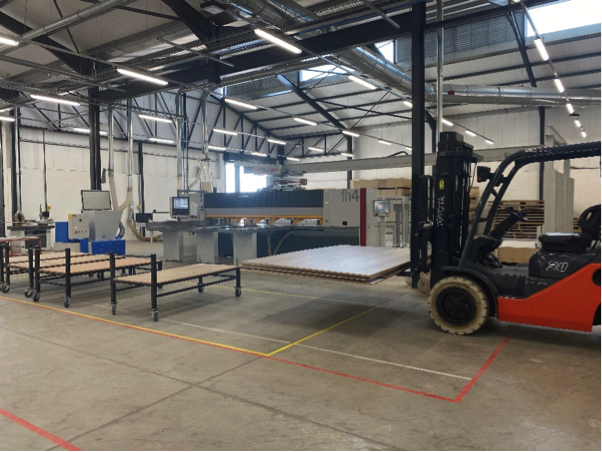
Beam Saw Machine loading area
The manufacturing process begins when the boards are taken to the Beam Saw Machine’s loading area. The Beam Saw Machine is a highly specialised piece of machinery which is programmed for precise board cutting. The fully automated machine is operated by one person who loads the boards onto the machine and then removes them once the boards have been cut according to the exact measurements and specifications sent through by the designer. Once a piece has been cut it is then labelled with a sticker that contains a barcode, which can then be scanned to show the name and description of the piece, as well as what needs to be done with it. This eliminates the risk of error further along the production line as each product is scanned at each machine to tell the machine what needs to be done.
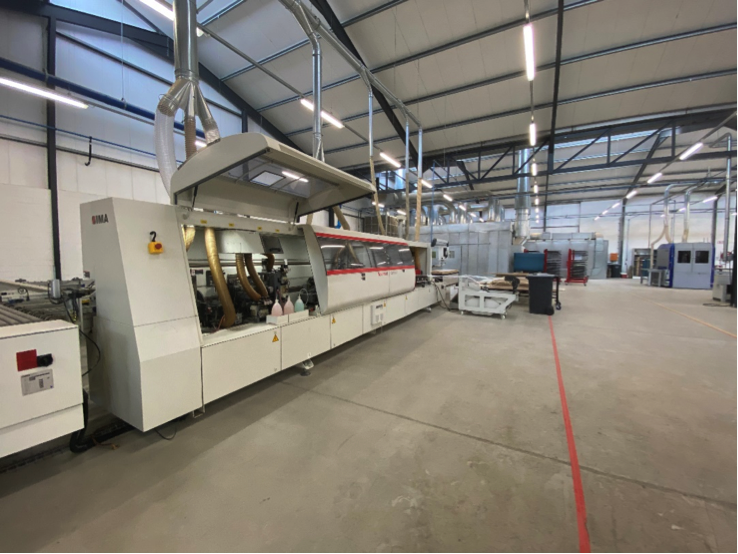
Edge Bander Machine
From the Beam Saw Machine, the cut board is then sent to the Edge Bander Machine. This state-of-the-art piece of machinery is responsible for edging each cut piece of board. The board is fed into the machine which glues on, trims and then neatens the edging, as well as polishing the board once the edging has been applied.
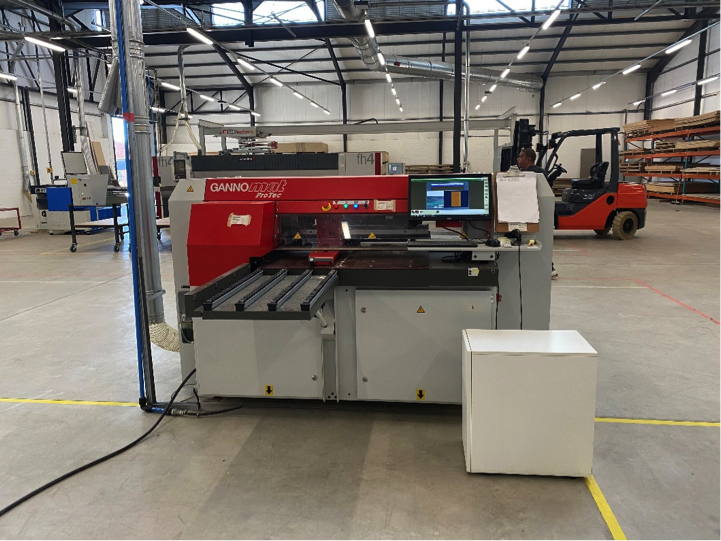
CNC Machine
Once the cut pieces of board have been edged, they are then taken to the fully automated CNC Machine which is where holes are drilled into the board for the dowels. The machine shoots and glues the dowels into the holes which have been drilled into the board. The dowels are used in place of metal nails for the reinforcement and the assembly of the product.
When the dowels have been inserted and glued, the now cut and edged pieces of board are then sent to the assembly line where the parts are sorted, and the individual pieces are glued together by hand to form the final product, such as a kitchen cabinet or bedroom cupboard. Once the piece has been assembled and the glue dried, the product is then carefully wrapped and sent to a waiting area where it awaits transportation.
It is through this process that the wood-based panels which we produce are made into the trendy pieces in people’s homes.
https://www.sonae.projects.coppertable.co.za/
Read our previous article here