




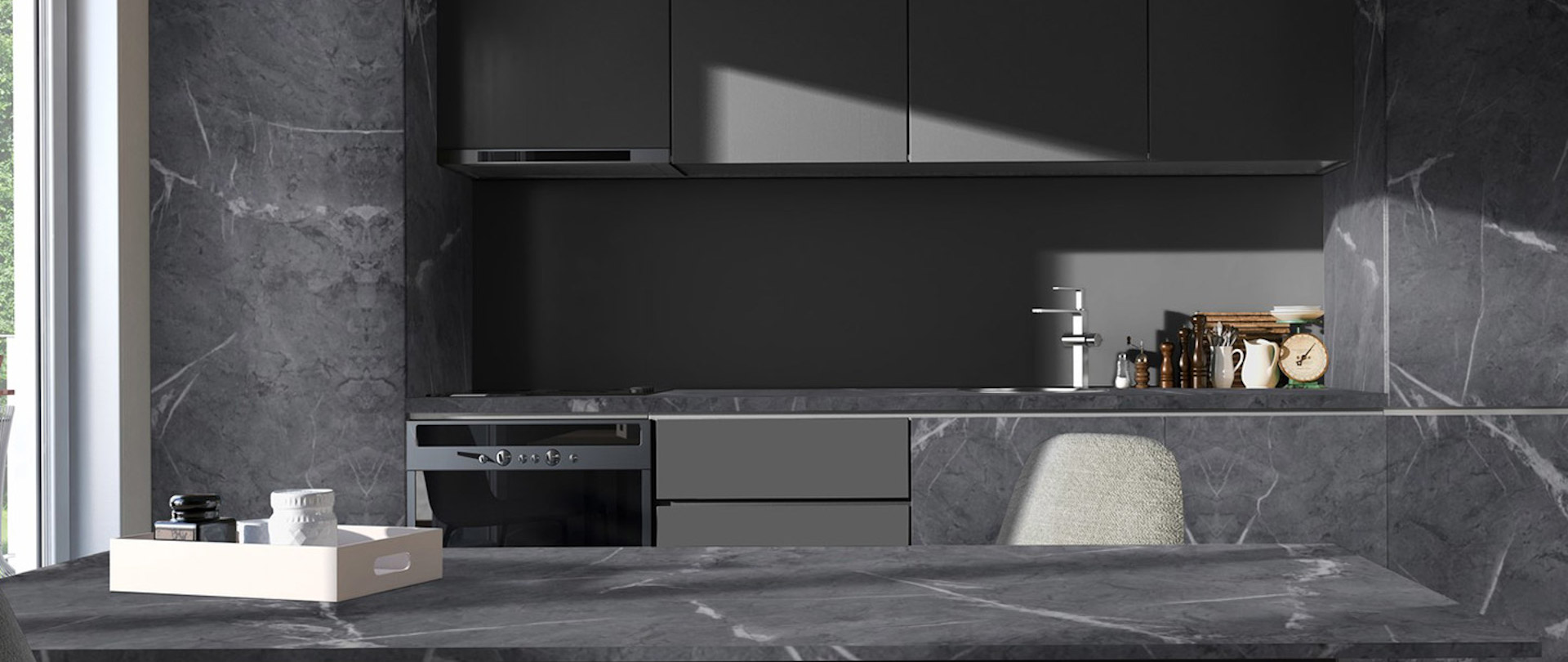
Designing a kitchen requires achieving cohesion between your vision and functionality and, as such, there are certain elements which one should keep in mind when coming up with the perfect kitchen design:
Smooth workflows
This is where work zones come into play, to create the ideal space. Creating an optimal workflow dictates that you’ll need to consider the 5 zones which make up a kitchen, namely: consumables, non-consumables, cleaning, preparation and cooking; to help you create an optimal workspace. According to Blum’s Dynamic Spaces, when designing and arranging the kitchen it is crucial that you take into consideration who will be using the space. Based on that information, you either arrange the zones (in the order in which they appear above) either clockwise, if the person is right-handed; or anti-clockwise, if the person is left-handed.
Get the right storage
One of the most important elements of designing a kitchen is to make the most of the space available to you. Often, cupboard and drawer spaces are not allocated correctly during the design process which leads to space being wasted. Custom designed cupboards, cabinets and drawers which not only make the most of the space available but that also take into consideration the needs of the person who will be using the kitchen – such as making frequently used items more easily locatable – are the best way to ensure that storage is optimised within the kitchen.
Ergonomic thinking
Ergonomics looks at the relationship between people and the objects and spaces that we use; and seek to optimise functionality to work in favour of the user.
One way to ensure a kitchen is ergonomic is to create levels which are tailored to the person who will be using it. Sort the contents of the kitchen based on how often they are used and store them at the right level for that person, ensuring clear visibility and easy access. Storing the contents of your kitchen at the right level will help the user avoid unnatural postures such as having to bend down or stretch to reach things. Things that aren’t used often should be located in the lowest or highest spaces in the kitchen.
Lighting
Having the correct lighting can make or break a space, especially a kitchen, where the lighting ideally needs to serve both a functional and decorative purpose. To optimise the lighting in the kitchen you need to create layers of light that provide functional lighting to aide cooking, as well as ambience. Making use of downlights can elegantly take a kitchen from ambient lighting to functional lighting at the flick of a switch. While lights under wall-mounted cabinets can offer an excellent source of light for the countertop workspace. Lights which serve a decorative purpose, such as chandeliers, can be used to enhance the ambient lighting in the kitchen.
Taking these elements into account when designing a kitchen can ensure that the space is not only tailored to the person who will be using it, ensuring ease of use; but that you get the optimal functionality out of the space available.
Take a look at our decors here
Read more on our previous article four interior design trends with a South African twist here