




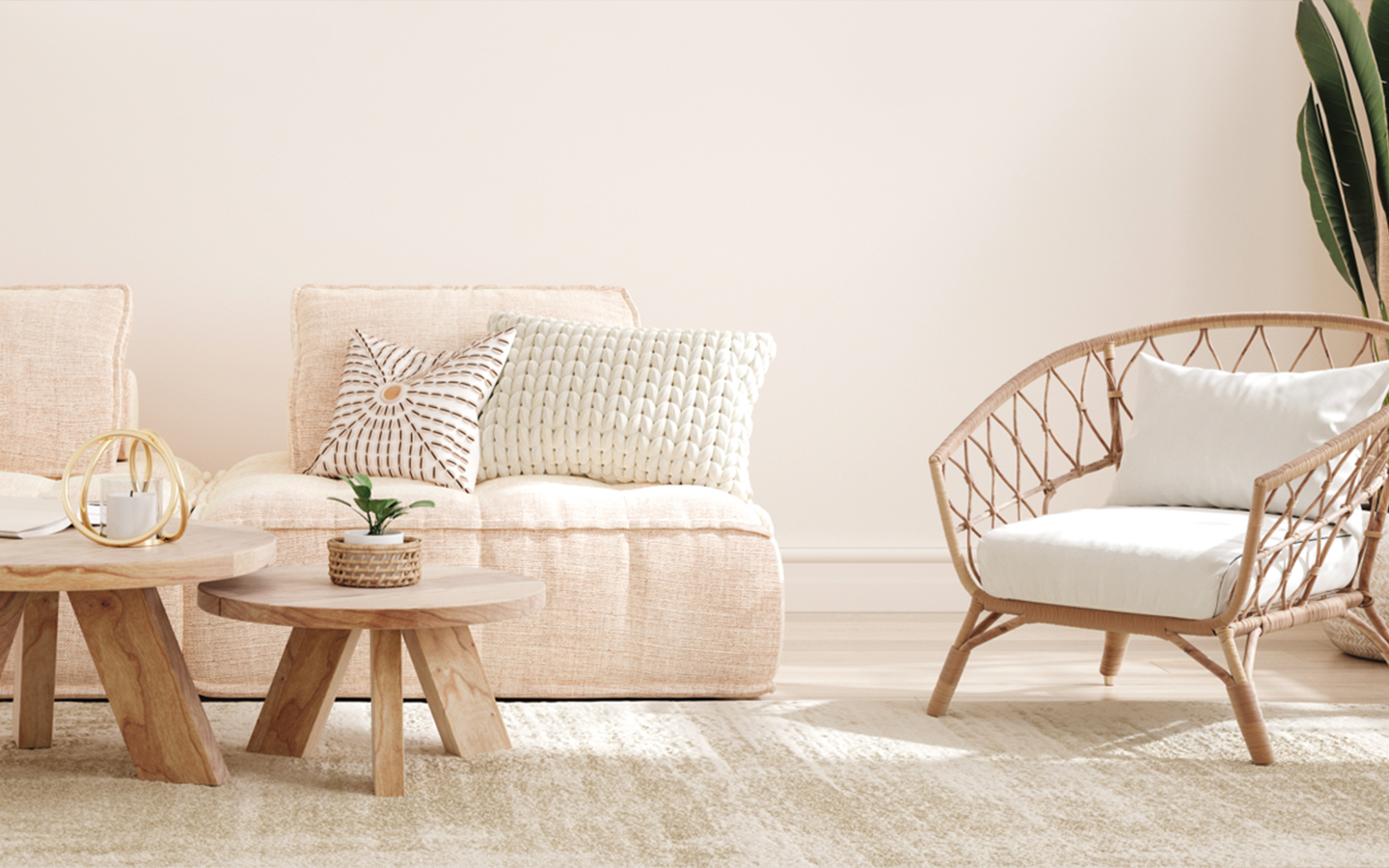
For any designer creating a new space for a client, there needs to be a process of ensuring that all practical and aesthetic needs are met. You’ll quickly learn that there is both an art and a philosophy to adhere to. A functional design that offers balance and function may seem easy to achieve at first glance but in reality, adding a beautiful decor aesthetic can define the dream interior space for anyone.
That being said, there are various design elements and philosophies that expert interior designers work on to achieve a functional and aesthetically pleasing home.
We take a look at 7 of these core principles and pillars.
Balance
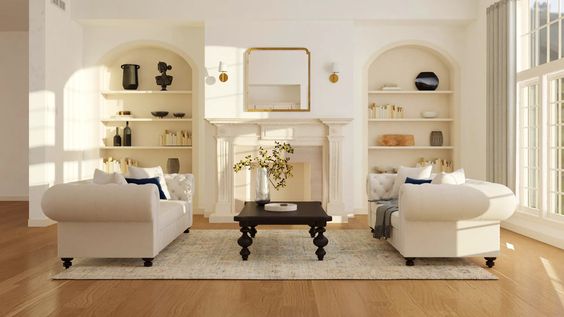
Image Source: pinterest.com
When referring to balance, we often think of symmetry and equilibrium within any given room or space. In essence, you’re looking to create harmony in your design direction, which can achieve balance in many ways through textures, shapes, and colours.
There are three conceptual pillars to balance. These include traditional symmetrical balance, which focuses on placing objects symmetrically on either side of an imaginary central axis; asymmetrical balance. On the flip side, it focuses on the imaginary axis while allowing dissimilar and oddly numbered objects, and finally, radial balance, which focuses on arranging objects around a circular design.
Unity
The concepts of uniformity and harmony are better accentuated within the principle of unity. Unity refers to keeping visuals balanced by adhering to similar colour palettes, patterns, textures, equilibrium spacing, and repetition of similar elements.
Unity can be easily described as the desire to see your elements carefully and meticulously curated while matching and complimenting each other. Simply put, one can achieve unity by using a singular colour scheme.
Rhythm
As humans, we inherently recognise patterns in our daily lives and nature. As such, we create and are drawn to elements of repetition in our interior design tastes. Rhythm is a concept that plays into these patterns and helps to carry aesthetically pleasing design features in the home.
One may accomplish rhythm in many different ways. You may use the same décor scheme for your cabinetry, but we call this repetition in rhythm. Other derivatives are achieved by arranging elements in ascending or descending order based on their size, colour, or other design characteristics.
Emphasis
A design element which stresses the importance of creating a central focal point with complementing additions within every room in your home. Emphasis can be achieved by utilising large pieces of furniture or accessories such as a piece of wall art or a central display cabinet which also works to inform the colour and pattern scheme of the room.
Contrast
We can quickly achieve contrasts in interior design when combining two or more widely differing designs or forms. As stated above, this is done through texture, colour, patterns and shapes.
A good colour scheme is perhaps the easiest way to achieve this effect because they are visually striking. A good example would be to combine black and white in a two-tone scheme. You may also use different room accessories, such as an oval mirror and a square or rectangular dining table.
Scale and proportion
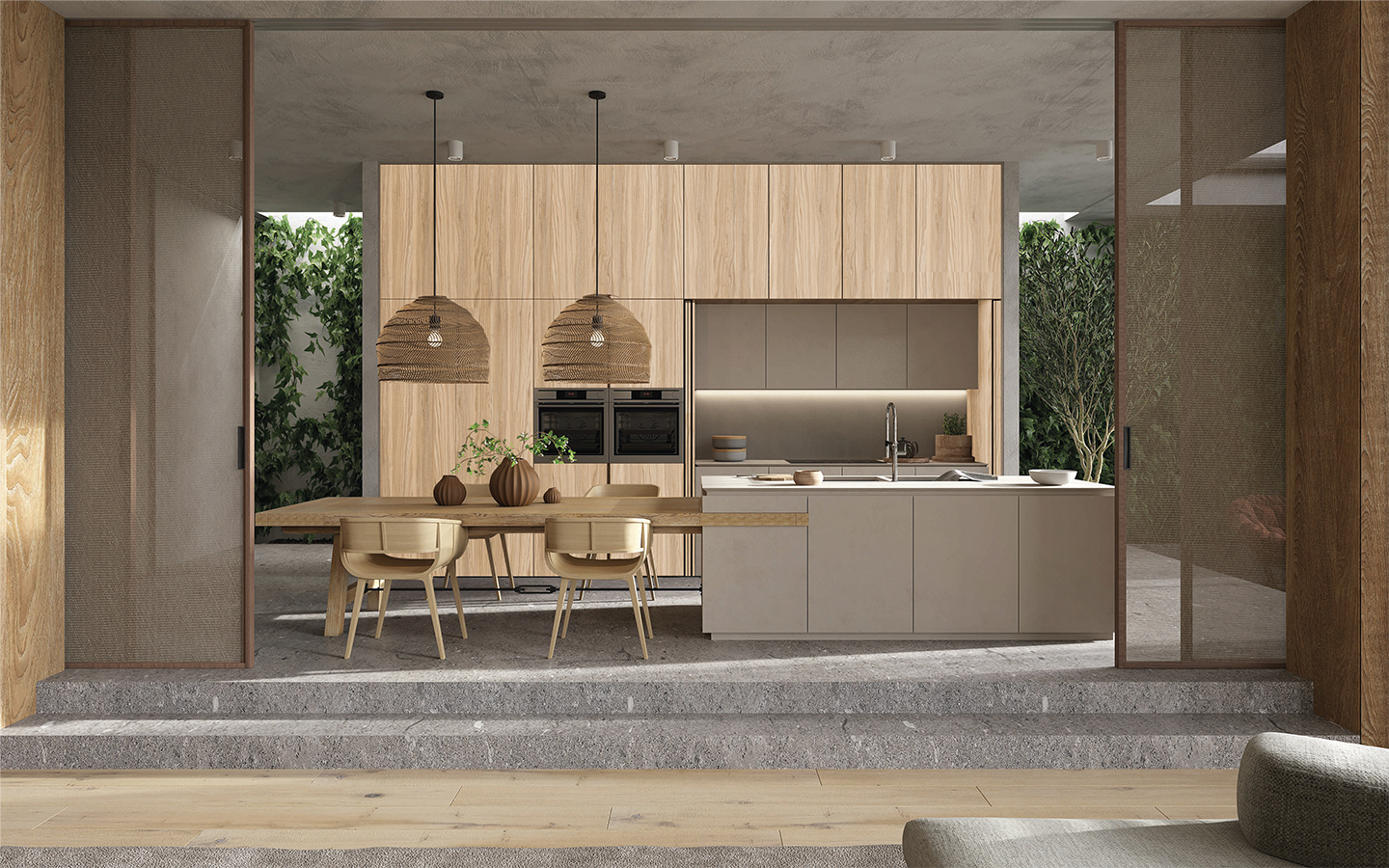
The principle of scale and proportion is achieved by keeping everything in your room within a specific ratio. For example, a grand piano doesn’t work in a modest to tiny apartment. Instead, you would look for a compact or electronic keyboard to complement that space.
Most designers are aware of the golden ratio. The ancient Greeks developed the 1.618 Ratio after discovering natural symmetry and proportion. Artists and architects have used this design element throughout the ages.
Details & Accessories
Detailing should always be the final focus in interior design. This pillar focuses on the principle that one should never overlook the little things. From the addition of finishes to cabinets to throw pillows in the bedroom, each small addition adds to and enhances the design effect of your home.
Take a look at our 3D Simulator
These local stores sell great accessories.
Always pay attention to these seemingly trivial effects. A slight adjustment to the details can either make or break the overall aesthetic that you’re trying to achieve.
For more information on our wood-based decorative panels and services, visit us at https://www.sonae.projects.coppertable.co.za/